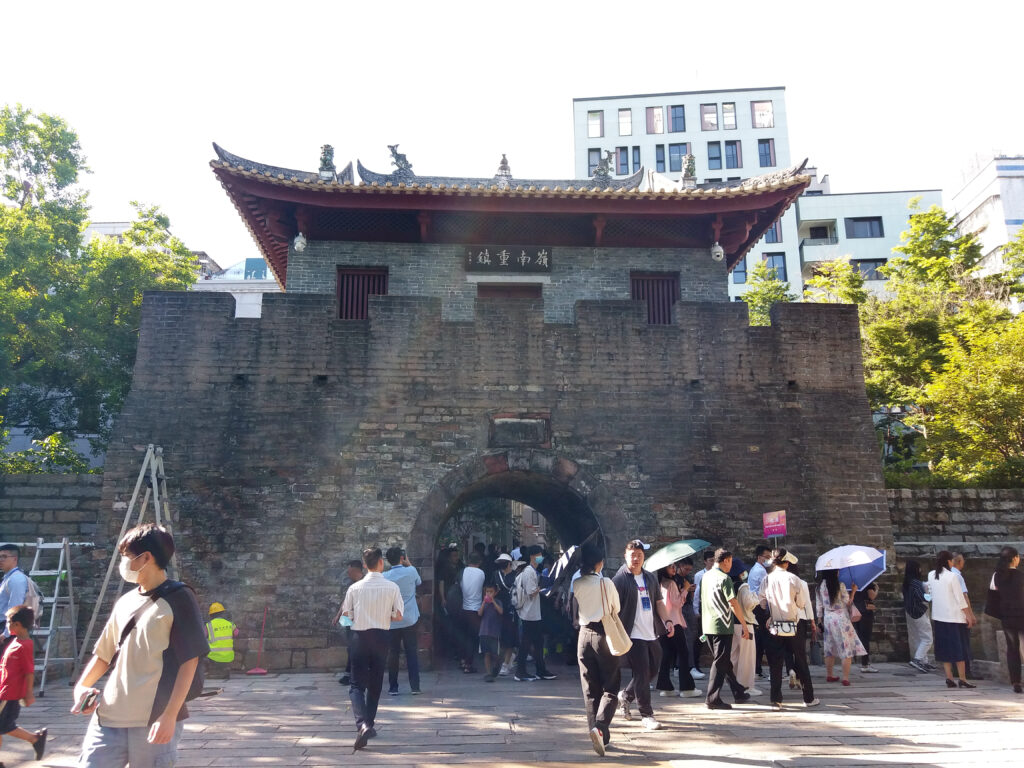
Shenzhen is usually introduced through speed, innovation, technology, and the future. That image is real, but it is not the whole story. For visitors who only see the skyline, the city can feel visually impressive but culturally thin. The missing layer often appears through Nantou Ancient City and Dapeng Fortress.
Nantou Ancient City gives Shenzhen a deeper timeline
Official Shenzhen descriptions increasingly position Nantou as one of the historical roots of the region. The area is tied to roughly 1700 years of administrative, military, economic, and cultural history. Recent renewal narratives describe it as a place where the city tried to avoid total demolition and instead keep visible the cultural DNA of an older urban layer.
It is also part of a wider sea-route memory
Shenzhen materials also connect Nantou to maritime exchange and silk-road geography. That matters because it reframes the city as a long-term coastal node rather than only a recent manufacturing and technology success.
Dapeng Fortress adds the coastal defense chapter
Dapeng Fortress is one of the clearest places to understand Shenzhen’s military and maritime past. Official museum material highlights its Ming-era foundations, defensive role, important gates and residences, and its status as one of the city’s earliest nationally protected cultural sites. It gives the eastern edge of Shenzhen a very different historical tone from the western innovation districts.
Why visitors should care
Without these places, Shenzhen can look like a city that began only a few decades ago. With them, the city becomes easier to understand as a place where older coastal history, military memory, silk-road exchange, and modern urban ambition all overlap.
That contrast is one of Shenzhen’s most useful cultural strengths, and it deserves to be part of any serious South China route.
Continue planning
Place this stop in context with the Shenzhen destination guide and verify transport through the planning hub.