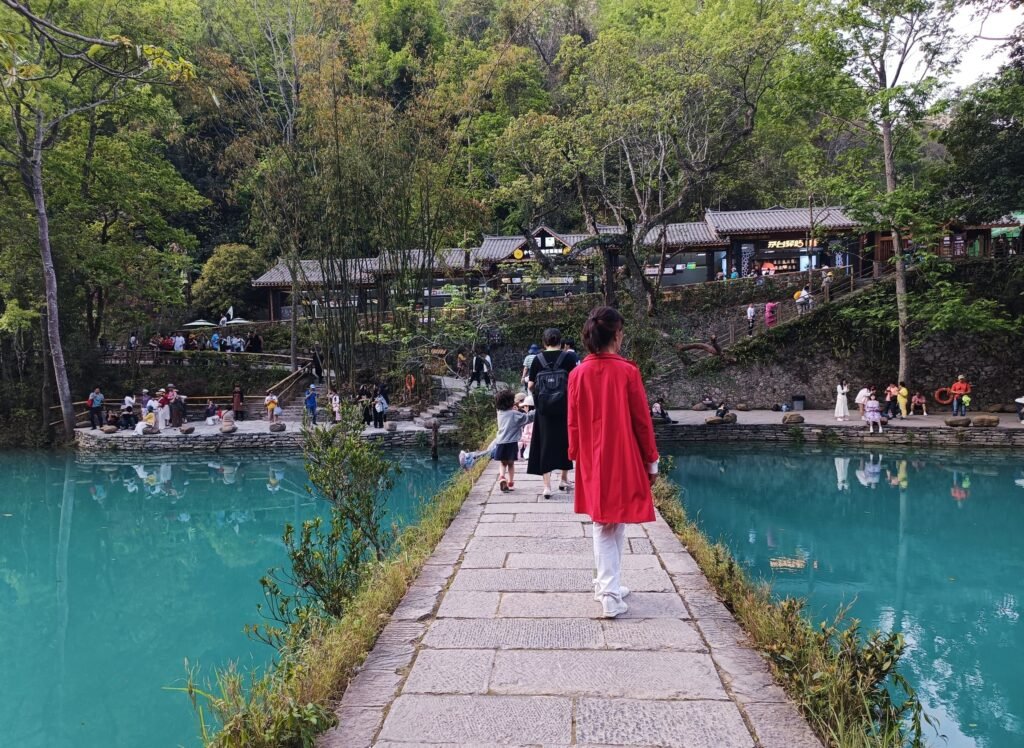
Libo County sits in southern Guizhou, on the edge of the Yunnan–Guizhou Plateau where it drops toward the Guangxi lowlands. It is a karst landscape of forested peaks, clear streams and waterfall staircases that has been recognised as a UNESCO World Natural Heritage site since 2007, and it rewards travellers who want genuine natural scenery rather than constructed attractions.
What Libo actually is
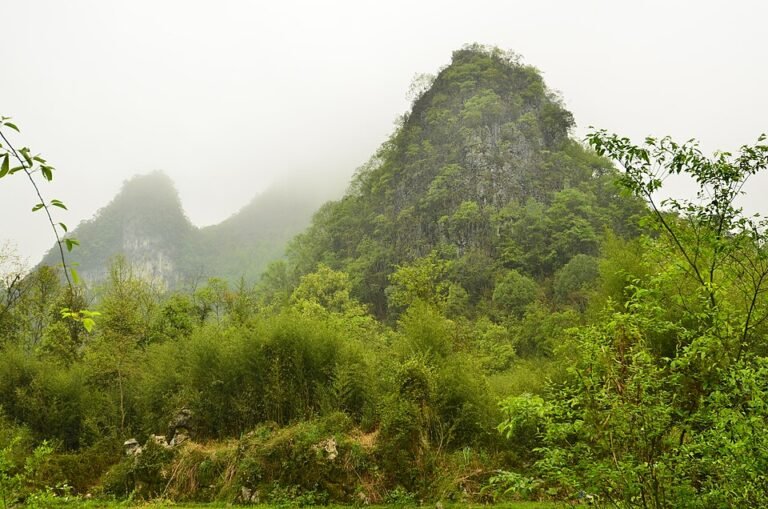
Libo is a county, not a single town, and its appeal is concentrated in two protected areas: the Libo Zhangjiang National Scenic Area and the adjacent Maolan (Maolan) National Nature Reserve. The scenic area is built around the Xiaoqikong (Small Seven-Hole Bridge) and Daqikong (Large Seven-Hole Bridge) zones, named after stone bridges that span the Zhangjiang river system. Maolan, just beyond, protects one of the few near-intact karst forests left at this latitude. The county itself is also home to several minority groups, including the Shui, Bouyei, Miao and Yao, whose villages sit among the hills.
The natural draw: karst forest and water
The headline experience is water moving through limestone. Xiaoqikong strings together a 12-kilometre corridor of cataracts, pools and forests: the 68-level waterfall drop, the Laya waterfall, the water forest where trees grow from a shallow stream, and the quiet鸳鸯湖 (Yuanyang Lake) where visitors can paddle among flooded trees. The scale is intimate rather than grand — the Chinese description of it as a “super bonsai” captures the feeling of a landscape compressed into a walkable valley. Daqikong adds a larger gorge and a natural bridge. Maolan offers harder hiking through primary karst forest for those who want to leave the boardwalks behind.
Cultural texture without the crowds
Libo is not a heritage old town in the Yunnan sense, but it is not empty of culture either. The Yao communities around the county, particularly the Baiku Yao (White Trousers Yao), maintain distinctive dress, embroidery and ritual life, and several villages near the scenic area open this to visitors without the choreography of bigger tourist centres. Ethnic food — beef hotpot, roasted-fish with tofu, and sour plum drinks — is part of the stay rather than a side show. The point is that the culture here is living and local, not reconstructed.
Who it suits
Libo suits travellers who like walking, water and forest more than museums and shopping. Because much of the scenic area is traversed on foot along boardwalks and gentle paths, it is accessible to moderately fit visitors, though the walking is longer than the distance suggests and surfaces can be wet and slippery. It is a poor fit for anyone who needs a dense urban or nightlife scene, and families with very small children should budget for the amount of strolling involved. Photographers do well here in the right light, especially around the bridges and the water forest.
How it fits a Guizhou or southern route
Libo works best as a southern anchor beneath Guiyang. The county is now reachable by high-speed rail from Guiyang in roughly an hour, which puts it within a comfortable day-trip radius but more rewarding as an overnight. It pairs naturally with the Huangguoshu waterfall and the minority-region circuit to the north, and it sits close enough to the Guangxi border to serve travellers heading toward Guilin. For a South China route built around Kunming and Guiyang, Libo is the place to trade plateau drama for subtropical green.
A further reason to treat Libo seriously is that it is one of the few UNESCO karst sites in the region with both a ticketed scenic core and a genuine adjoining reserve. That split lets you calibrate the visit: a half-day on the boardwalks for first-time visitors, a full day plus Maolan for those who want forest rather than viewpoints. Planning the two separately, rather than assuming the county is one attraction, is the difference between a satisfying stop and a rushed one.
Practical notes
- Libo is a county; base yourself near the Xiaoqikong scenic zone or in Libo town, and confirm which entrance your transport uses.
- The scenic area is large and mostly on foot — wear sturdy shoes and expect wet, uneven boardwalks.
- Best months are generally spring through early autumn; check current official sources for the operating season and any flood or maintenance closures.
- The Maolan reserve requires more planning than the ticketed scenic area; verify access and guide requirements in advance.
- Ethnic-village visits are informal — ask before photographing people or ceremonies.
- Treat all ticket, shuttle and cable-car pricing as variable; check current official sources before you travel.