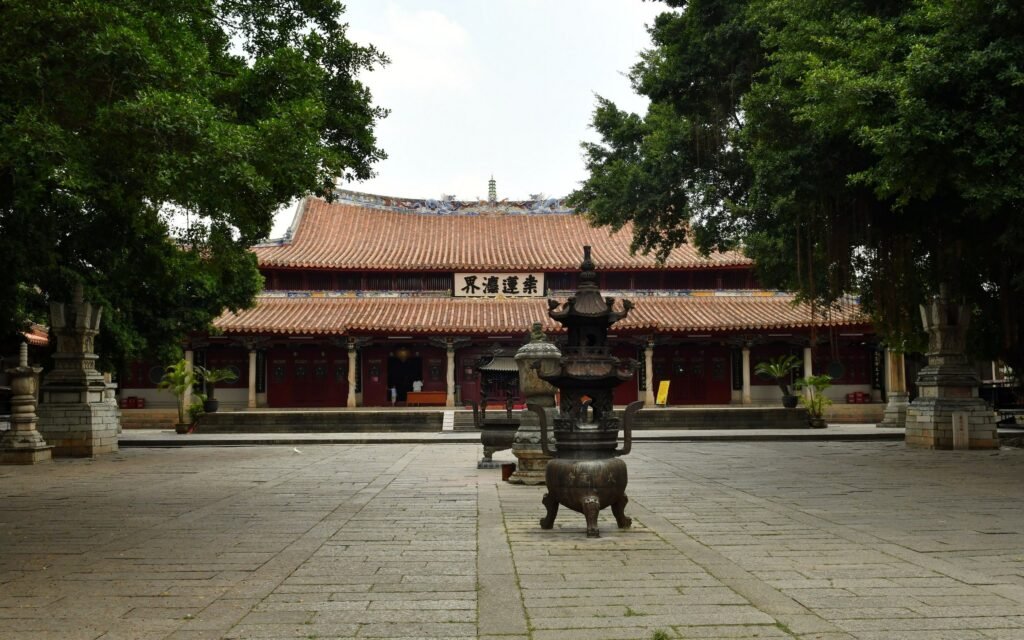
Quanzhou (泉州市) is a port city on the southeast coast of Fujian and the heart of a UNESCO World Heritage inscription, “Quanzhou: Emporium of the World in Song-Yuan China,” that recognises 22 sites tied to its medieval maritime trade. For a South China route, Quanzhou is the strongest heritage stop in the Fujian portion: a living old city where a Tang-era temple, a Song-era mosque, and a Confucian academy sit within a short walk, expressing a rare degree of religious and cultural coexistence.
A former international port, now a walkable old city
Between the 10th and 14th centuries Quanzhou was one of the great ocean hubs of East Asia, trading ceramics, silk, and tea for spices and goods from across the seas. The legacy is not a single monument but a scatter of 22 heritage sites across the wider city, eight of them in the old town of Licheng district. That makes Quanzhou unusual: you can read a thousand years of global exchange by walking a few streets, rather than by visiting one enclosed museum.
What Quanzhou is actually good for
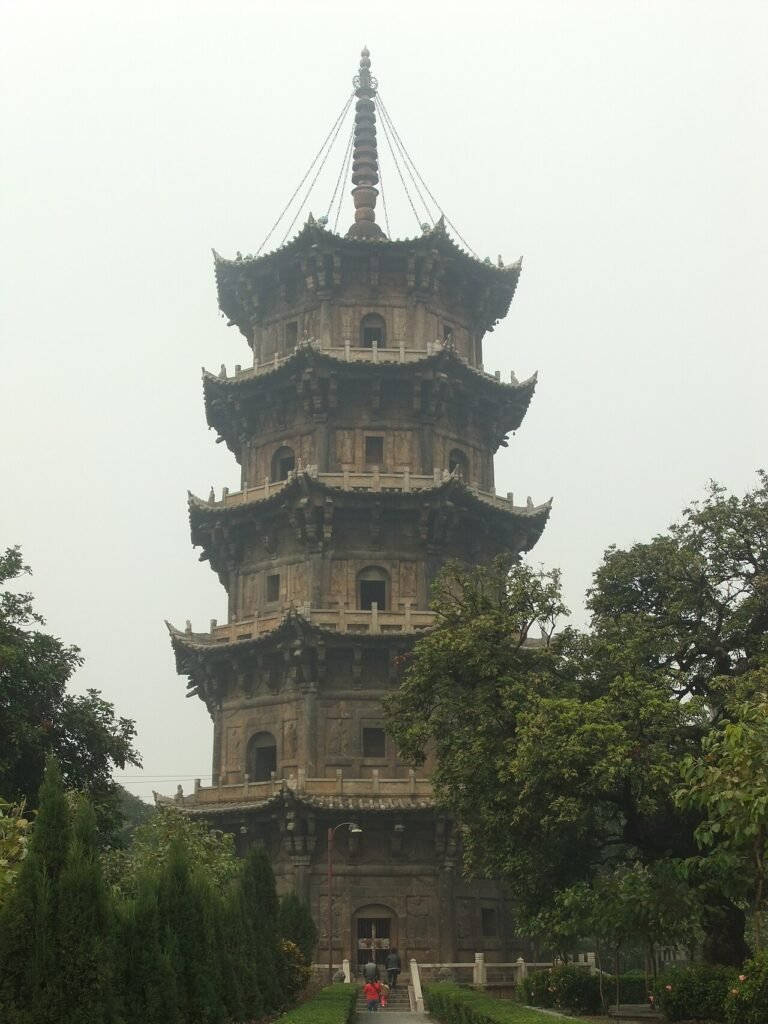
The old town centres on West Street (西街) and Kaiyuan Temple (开元寺), the large Buddhist foundation with its pair of stone pagodas, the East and West Towers. Nearby, the Qingjing Mosque (清净寺, also written as the Mosque of the Pure Heart) is among the oldest Islamic buildings in China, and the Confucian Temple (府文庙) shows the parallel scholar-official tradition. The Maritime Museum and the puppet-theatre tradition round out the picture. The value is in the density and the contrast — a working city where a mosque, a temple, and a academy share the same few blocks — not in any single spectacle.
Who it suits
Quanzhou suits travellers interested in history, religion, and urban culture, and those who prefer walking cities to scenic areas. It fits a Fujian route built around Xiamen and the Tulou, giving the coast a heritage anchor between the island city and the earthen towers inland. It is less compelling for visitors who want dramatic nature or nightlife; the reward is slow, layeered, and intellectual. Photographers will like the red-brick Minnan architecture and the pagodas, but the mood is contemplative, not exhilarating.
The coexistence that defines it
What sets Quanzhou apart from other old cities is the visible stacking of faiths and trades in one place. A Manichaean carving, an Islamic cemetery, a Daoist rock image, a Buddhist temple, and a Confucian academy all belong to the same heritage story, because the port drew merchants and communities from many regions. The planning takeaway is to treat the city as a network of sites, not a checklist, and to spend time in the old town where the layering is densest. The UNESCO framing is the honest lens: Quanzhou is best understood as a system, not a sight.
How it fits the wider southern route
In Fujian, Quanzhou sits between Xiamen to the south and the Tulou country (Yongding, Nanjing) to the west, so it links naturally into a Xiamen-based coastal-and-inland loop. A clean shape is Xiamen → Quanzhou → Yongding Tulou → (back via Xiamen or north), or the reverse. It has no place in a Guangxi route; the two provinces are separate trips. Quanzhou works as one to two nights of heritage within a Fujian plan, usually entered from Xiamen by rail, and it balances the Tulou’s rural isolation with urban depth.
Practical notes
- Quanzhou is reached by high-speed rail, often via Xiamen; confirm current schedules via official sources.
- The 22 heritage sites are spread across the city; focus on the old town (Licheng) for the densest cluster.
- Kaiyuan Temple and the Qingjing Mosque are the core old-town stops; verify opening days and any entry rules.
- Best months are spring and autumn; Fujian summers are hot and the coast is typhoon-exposed.
- The city is walkable but spread; use local rail or road to reach outer sites such as the bridges or kilns.
- Puppet theatre and the Maritime Museum add depth; check current performance and opening times.
- Allow one to two nights; Quanzhou pairs with Xiamen and the Tulou, not with Guangxi.