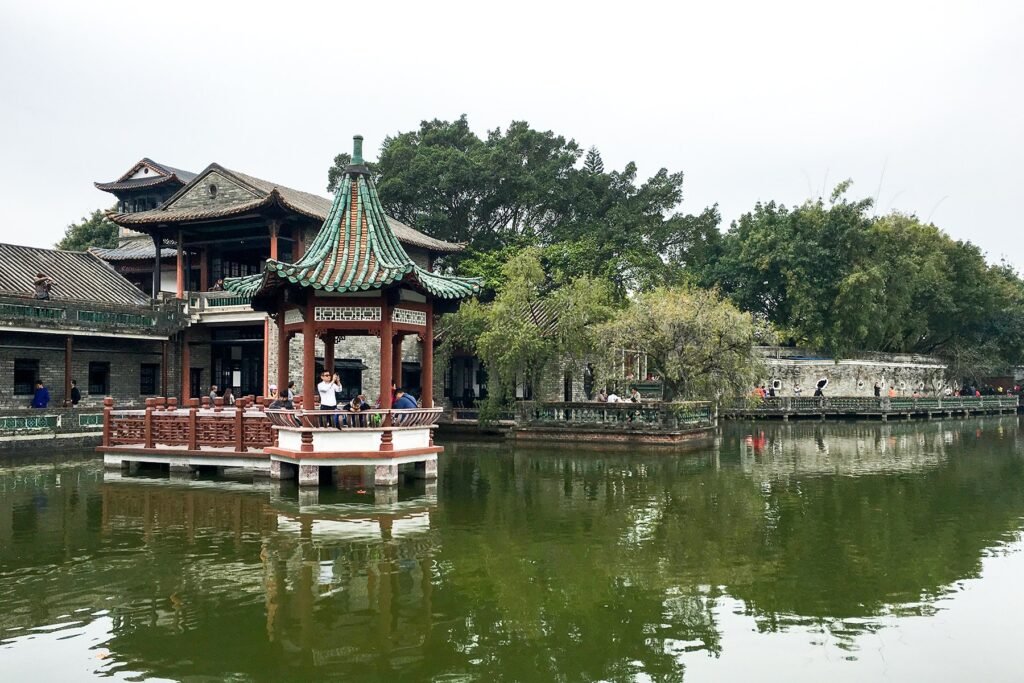
Dongguan (東莞市) is straightforward to reach but requires deliberate sequencing because its attractions are scattered across towns rather than concentrated in one walkable centre. This guide covers arrival logic, realistic time, season, and how to fit the city into a Pearl River Delta route.
Getting there
Dongguan has no commercial airport of its own. The usual approach is to fly into Guangzhou Baiyun International Airport or Shenzhen Bao’an International Airport and transfer by rail or road, with surface journeys of around an hour from either, depending on traffic and the specific town. Within the rail network, Humen station is the key node: it sits on the Guangzhou–Shenzhen–Hong Kong high-speed line, so direct services connect it with Hong Kong (West Kowloon), Shenzhen, and Guangzhou. Conventional rail also serves Dongguan and Dongguan East stations for slower connections. The practical implication is that Dongguan is best entered as part of a rail itinerary rather than as a standalone fly-in stop.
How much time to allow
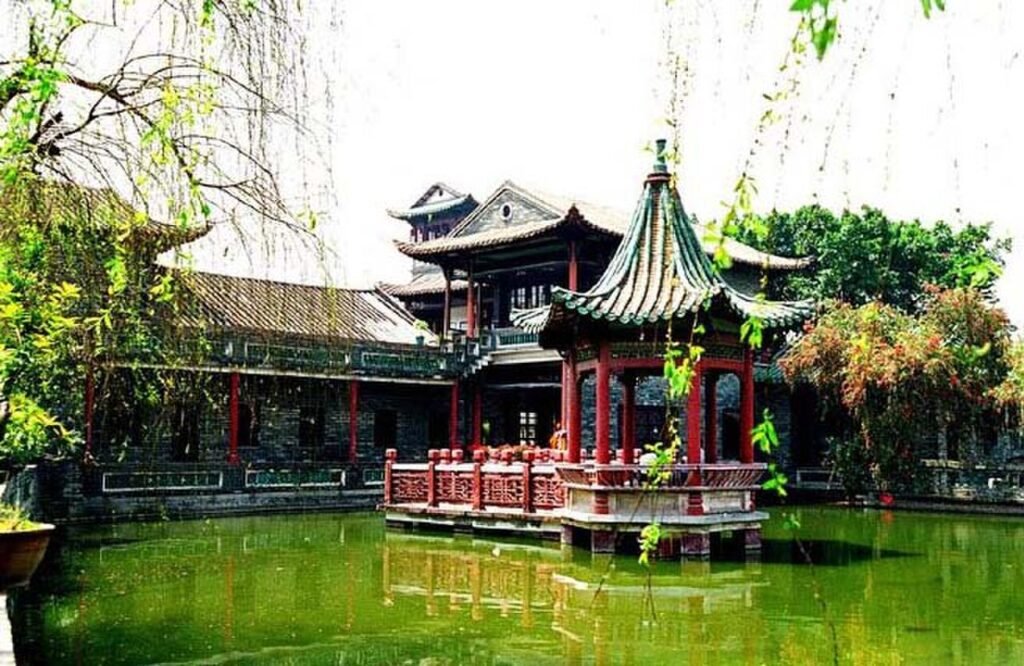
A single full day covers the essentials if you are disciplined: Keyuan garden in the morning and the Humen forts and opium-war museum in the afternoon. Two days let you add either Songshan Lake or Nanshe Ancient Village without rushing, and a two-night stay avoids mid-trip hotel changes. Three days is only worthwhile for travellers who want both lakeside cycling and a village visit plus the history sites. Because the towns are far apart, treat any plan that lists more than three sites in one day as optimistic.
Best months
The delta climate is warm and humid for most of the year. Autumn and winter, roughly October through February, bring cooler, drier conditions that suit walking and the open-air fort sites. Spring is warm but can be humid, and summer is hot with frequent rain, which argues for indoor options such as the museums and the garden’s shaded pavilions during the middle of the day. Check current weather and any typhoon advisories during summer, as coastal and riverside sites can be affected.
Sequencing with the core delta
Dongguan works in either direction on the Guangzhou–Shenzhen axis. A typical loop runs Guangzhou to Dongguan (Keyuan and Humen) to Shenzhen, or the reverse, with Hong Kong reachable from either end via Humen or by returning to Shenzhen. Foshan pairs naturally with Guangzhou as a Lingnan-architecture add-on before or after Dongguan. The city is less obviously combined with Zhuhai or Macau unless the route already swings through Shenzhen or Zhongshan, in which case Dongguan can sit on the northern leg. Keep the rail logic simple: move along the high-speed corridor and avoid backtracking.
What to check before travel
Opening days and reservation rules for museums and forts change, and some sites require advance booking through Chinese platforms, so confirm current requirements before you set a schedule. Transport between towns is not uniformly served by metro, so confirm how you will move from the rail station to Humen or Songshan Lake; ride-hailing is the dependable option. If you rely on a China visa or a transit exemption, verify the current entry rules with official sources before booking cross-border legs involving Hong Kong.
Food and daily rhythm
Dongguan eats Cantonese with a delta inflection, and costs are generally lower than in Guangzhou or Shenzhen. Dim sum breakfasts, rice-noodle dishes, and local braised-pork specialities are the dependable choices, and the Humen coastal area is associated with seafood. None of this requires advance planning beyond picking a busy neighbourhood teahouse, but it does reward a relaxed morning pace. Because the city lacks a single tourist quarter, build your day around one or two anchors and let meals fill the gaps rather than chasing dispersed sights.
Practical notes
- Arrive by high-speed rail to Humen station or via Guangzhou/Shenzhen airports; no local commercial airport exists.
- Allow one full day for Keyuan plus Humen, or two days to add Songshan Lake or Nanshe village comfortably.
- Prefer October to February for outdoor sites; avoid the hot, rainy summer middle of the day.
- Sequence Dongguan on the Guangzhou–Shenzhen corridor and treat Hong Kong as reachable from either end.
- Confirm museum and fort opening days and any reservation needs on current official sources before travel.
- Use ride-hailing for cross-town moves, as metro coverage between towns is limited.
- Verify current China visa or transit-exemption rules before any Hong Kong cross-border leg.