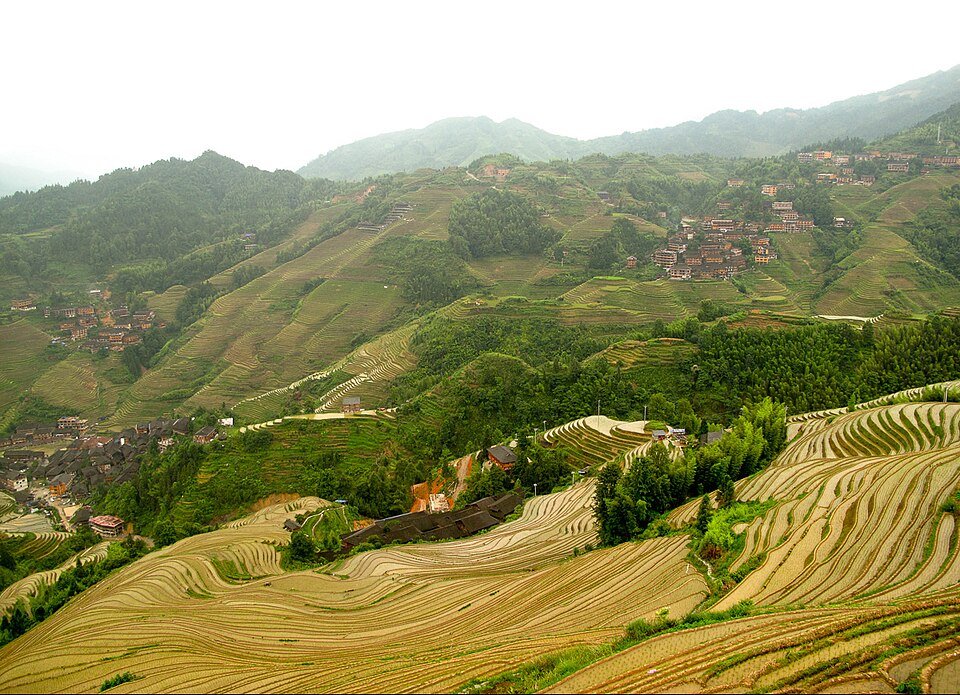
The Longji Rice Terraces (龙脊梯田) are a mountain landscape in Longsheng county, north of Guilin, and the practical planning is dominated by three things: the road transfer from Guilin, the choice between the Ping’an and Jinkeng zones, and the farming calendar that decides what the terraces actually look like. It is a place that repays an overnight stay and punishes a rushed day trip.
Access from Guilin
There is no train to the terraces; the normal approach is a road transfer from Guilin, which takes a meaningful part of a morning or afternoon depending on the exact village and road conditions. Some travellers also come via Longsheng town and transfer up. Because the final climb is on mountain roads, the transfer is best booked as a through service rather than assembled from separate legs. Confirm current road options and timings via official sources, since the last stretch is weather-sensitive.
Which zone to base in
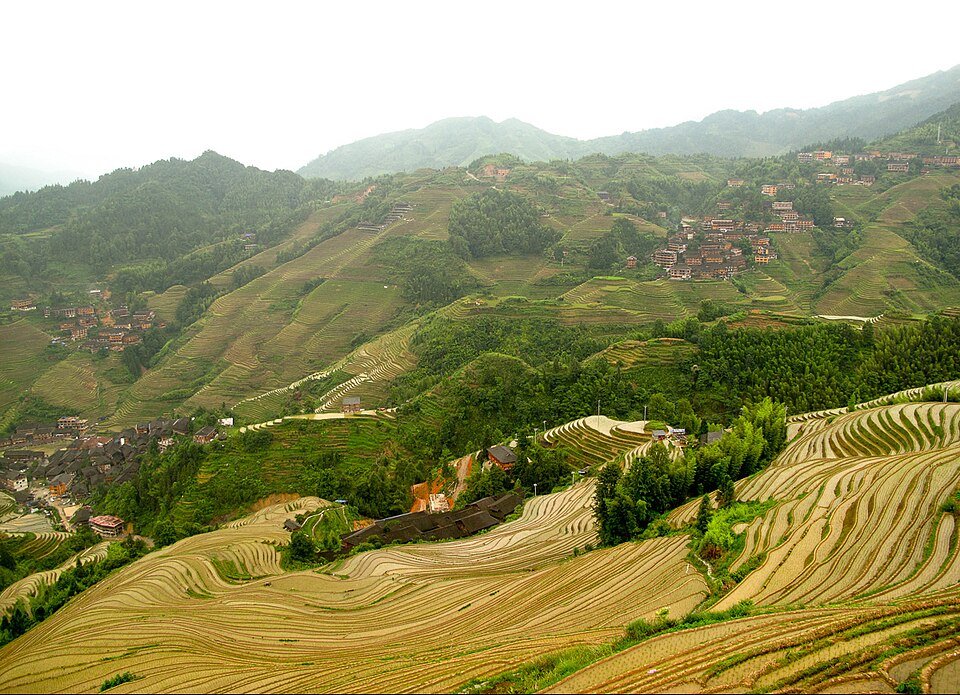
Ping’an (平安) is the older, more compact Zhuang terrace area, close to the “Seven Stars with the Moon” viewpoint, and it is the easier first choice for a single night. Jinkeng Dazhai (金坑大寨) is higher and wider, with cable-car access to summits such as Golden Buddha Peak, and it suits photographers who want big panoramas and Red Yao villages. The ancient Zhuang village is the quietest. These zones are not adjacent, so splitting them across two nights is possible but costs transfer time; most visitors pick one and walk its paths. Decide by the view you want, not by trying to see all three.
How many nights the area deserves
One night is the minimum and is enough if you arrive by early afternoon, walk the terraces at golden hour, and catch dawn mist before leaving. Two nights is more comfortable and lets you absorb a second viewpoint and a village evening without racing the transfer. Three nights is only justified for serious photography across different light or for a combined Ping’an-and-Jinkeng plan. As a rule, Longji is a one-to-two-night add-on to Guilin, not a standalone destination.
Seasonality and what you will see
The terraces are a crop, so the surface changes with the year. After spring planting the fields are flooded and reflective; through summer they are green; around harvest they turn gold; in some winters they are bare or snow-lined. None of these is “wrong,” but they are very different experiences, so match the month to the image you want and verify the current farming stage before booking, because the exact dates shift with weather. Mist and clear dawn are the recurring photographic prizes, and both require an overnight stay.
Sequencing with Guangzhou, Guilin, Nanning, and Xiamen
Longji belongs on a Guilin-based plan: Guilin or Yangshuo → Longji → back to Guilin, or onward north. It does not chain toward Nanning or Beihai without a long backtrack, and it is irrelevant to a Fujian route (Quanzhou, Yongding). Keep it north, attached to Guilin, and treat the Guilin stay as the hub. If your broader route is Guangzhou → Guilin, adding Longji as a two-night spur is the cleanest way to include it.
What to verify before travel
Terrace tickets, cable-car operation, and village access can all change with season and weather. The farming stage is the biggest variable for satisfaction, so check the current condition rather than a fixed “best month.” Road transfers from Guilin should be confirmed, and mountain weather can close or slow the final climb. Village guesthouses are basic and fill on holidays, so book through verified channels and reconfirm. Treat any single stated price or “always open” claim as needing current confirmation.
Practical notes
- Transfer from Guilin by road; allow a half-day and confirm current options via official sources.
- Choose Ping’an or Jinkeng as your base; do not assume the zones are walkable between each other.
- Stay one to two nights; dawn mist needs an overnight, not a day trip.
- Match the month to the terrace stage you want and verify the current farming calendar.
- Book village accommodation through verified channels; standards are basic and holiday fill-up is real.
- Cable cars are weather-dependent; confirm operation locally before relying on them.
- Carry a China-compatible payment app or cash for small villages and meals.
- Check mountain road conditions in poor weather before the final climb from Longsheng.