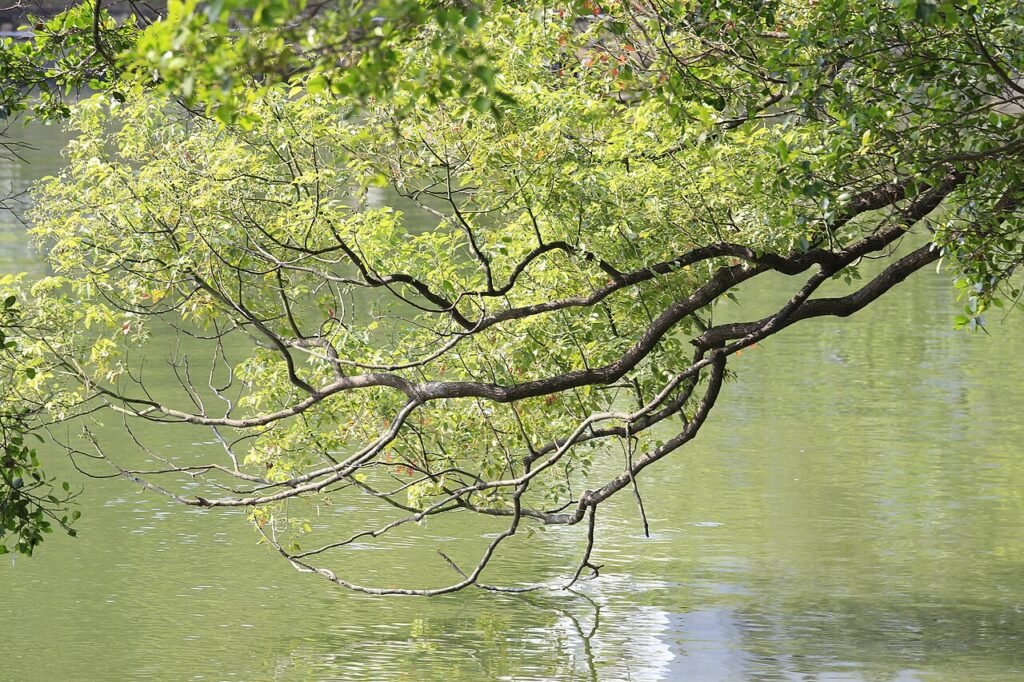
Huizhou (惠州市) rewards a loose, base-and-excursion approach more than a city-centre itinerary, because its worthwhile sites are spread across a lake, a mountain, hot-spring country, and a distant coastline. This guide covers arrival, timing, season, and sequencing for a South China route.
Getting there
Huizhou is reached most easily by high-speed rail from Shenzhen and Guangzhou, with short journey times that make it a realistic day-or-overnight extension of a delta trip. For travellers arriving by air, the practical airports are Shenzhen Bao’an and Guangzhou Baiyun, with road transfers onward; Huizhou itself is not a primary international gateway, so flying in directly is usually less convenient than rail from a neighbouring hub. Within the city, the sites are not clustered, so local transport means a mix of rail to the central district, then road transport for the mountain, springs, and coast.
How much time to allow
One full day covers West Lake plus a mountain or hot-spring visit if you stay central, but that is tight. Two days let you add a coastal excursion or a proper mountain half-day without rushing. Three days are sensible if you want the lake, Mount Luofu, a hot-spring stay, and a beach, because the coast is far enough that it needs its own block of time. Treat Huizhou as a minimum two-night base if the beaches are part of the plan; a single night only supports the lake and one excursion.
Best months
The region is warm for most of the year, with spring and autumn generally the most comfortable for walking and outdoor activity. Summer is hot and can be rainy, which argues for early-morning coast time and indoor or shaded mountain walks, though the inland hills are cooler than the shore. The sea-turtle reserve and beach activities follow seasonal patterns, so check current guidance on the best window rather than assuming year-round access. Typhoon season can disrupt coastal plans; confirm advisories before committing to a beach day.
Sequencing with the core delta
Huizhou sits east of the Shenzhen–Guangzhou corridor, so it works best as an eastern extension rather than a through-stop between the western delta cities. A common shape is Guangzhou to Shenzhen, then a rail leg east to Huizhou for a slower few days, before returning toward the core or continuing along the coast. It does not combine efficiently with Zhuhai or Macau without backtracking through Shenzhen, so keep it on the eastern side of the loop. Hong Kong is reachable via Shenzhen rather than directly, which should be reflected in the rail plan.
What to check before travel
Opening days, ticket rules, and reservation systems for the mountain, hot-spring resorts, and any reserve change, and some are booked through Chinese platforms, so confirm current requirements before setting a schedule. Coastal and mountain weather can shift plans, particularly in summer, so build flexibility around the beach day. If a leg involves crossing to Hong Kong, verify current visa or transit-exemption rules with official sources before booking.
Choosing a base
The central district near West Lake is the most convenient base for a short stay, putting the lake within walking distance and keeping rail access close. A hot-spring stay in the inland counties trades centrality for relaxation and works if the mountain and springs are the priority. The eastern bays support a beach-focused night but leave the lake and mountain far away, so pick the base that matches the one or two threads you actually want rather than trying to sample all zones from one hotel.
Practical notes
- Reach Huizhou by high-speed rail from Shenzhen or Guangzhou; use Shenzhen or Guangzhou airports for air arrival.
- Plan at least two nights; add a third if beaches are included, since the coast is far from the centre.
- Prefer spring and autumn for comfort; check summer typhoon and heat advisories.
- Keep Huizhou on the eastern side of a delta loop; return via Shenzhen for any Hong Kong leg.
- Confirm mountain, hot-spring, and reserve opening and booking rules on current official sources.
- Choose a base by intent: central lake for convenience, inland for springs, coast for beaches.
- Verify current China visa or transit rules before any Hong Kong cross-border segment.