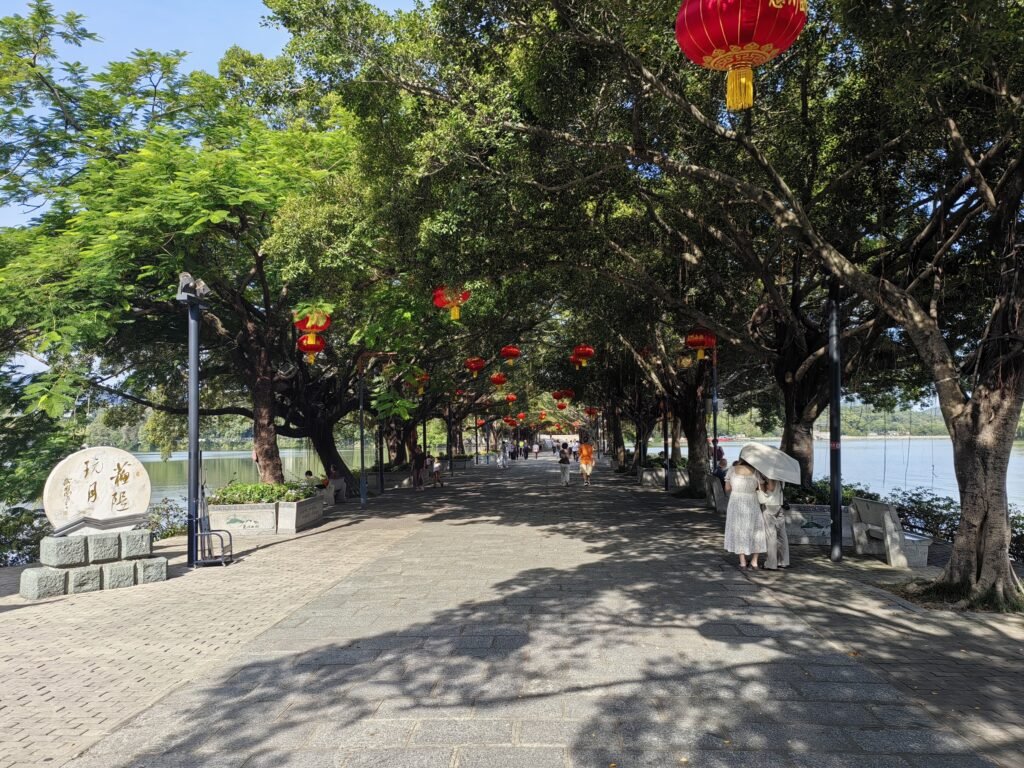
Huizhou (惠州市) lies on the eastern edge of the Pearl River Delta where the coast meets forested mountains, and it is often passed over for Shenzhen or the western delta. Its value on a South China route is the combination of a calm urban lake, a Taoist mountain, hot-spring country, and accessible beaches that together make a credible relaxation counterweight to the region’s dense cities.
The character of the city
Huizhou spreads along the coast and inland hills of southeastern Guangdong, so it behaves less like a single city than like a set of distinct zones: a central lake district, a mountain to the north, hot-spring and forest areas further inland, and a coastline to the south and east. That spread is the planning point. Huizhou is not where you go for dense urban sightseeing; it is where you go to slow down after Guangzhou or Shenzhen, with short, self-contained excursions rather than a packed itinerary. For a route built on the delta’s headline metropolises, it supplies the recovery day.
The urban lake: Huizhou West Lake
The central draw is Huizhou West Lake (惠州西湖), a scallake-and-garden landscaped area inside the city that is unrelated to the far more famous Hangzhou lake of the same name. It is built around interconnected ponds, stone bridges, and pavilions, with a pagoda and a memorial hall associated with the Song-dynasty poet Su Dongpo, who was exiled to this region. It is walkable, free to enter in its open areas, and works well as an early-morning or evening stroll. Its value on a route is as a gentle, central anchor that needs no long transfer and resets the pace before a mountain or coastal day.
Mount Luofu and the inland hills
North of the city, Mount Luofu (罗浮山) is a long-established Taoist mountain with forested slopes, waterfalls, and temples, and it is treated as one of Guangdong’s significant peaks. It suits a half day to a full day of walking, with cable-car options for those who do not want a full ascent. The broader Huizhou hinterland, including the Nankun Mountain (南昆山) area, is known for forest scenery and hot springs, which positions Huizhou as a base for wellness stays as much as for sightseeing. These inland areas are cooler than the coast in summer and busier on weekends.
The coast: Daya Bay and the eastern beaches
Huizhou’s coastline runs through Daya Bay (大亚湾) and further east to bays such as Xunliao and Double Moon Bay (巽寮湾, 双月湾), with sand beaches, islands, and seafood. The eastern bays are the more attractive for swimming and water activity, but they sit a meaningful drive from the city centre, so they are best treated as an overnight or a full-day excursion rather than a quick visit. A sea-turtle nature reserve on this coast is known for nesting activity in the warmer months. The trade-off is distance: the beaches are real, but they are not a short hop from West Lake.
Hot springs and Hakka heritage
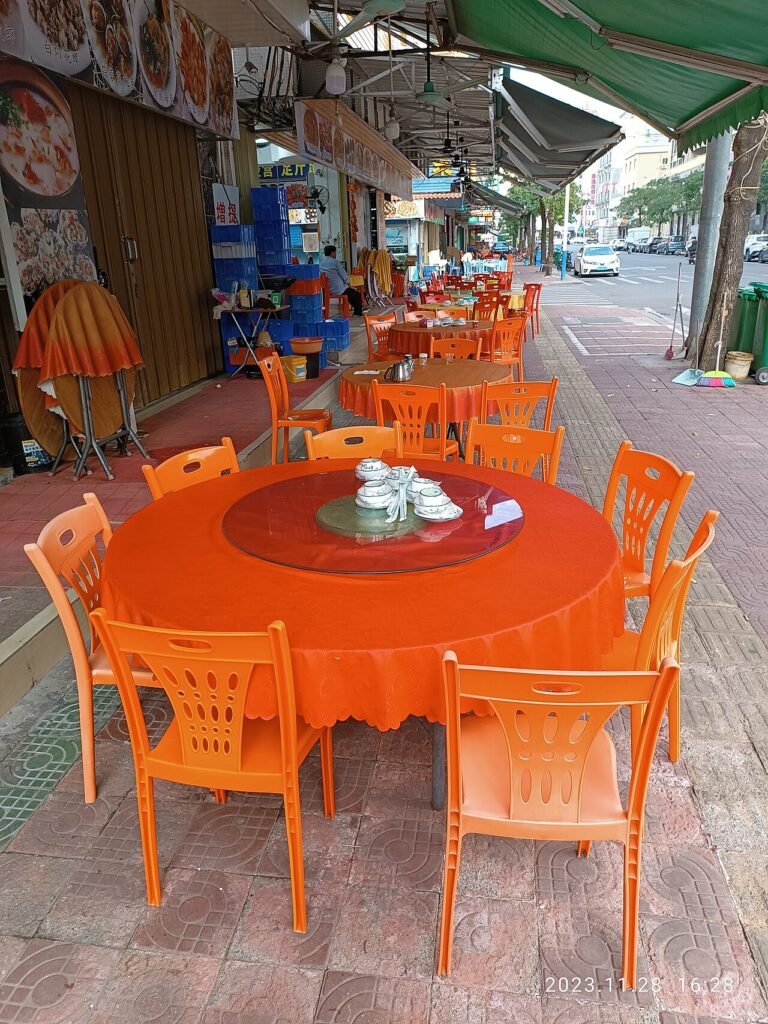
Hot springs are a consistent Huizhou theme, concentrated in the inland counties and paired with forest resorts. The city also sits within a region with Hakka cultural roots, visible in local food and in village traditions, which gives the cuisine a Cantonese-and-Hakka character: salt-baked chicken, stuffed tofu, and coastal seafood all appear. For a route, this means Huizhou can justify a night built around a hot-spring stay without needing a list of monuments, which is a different value proposition from the delta’s cities.
Who Huizhou suits and how it sequences
Huizhou suits travellers who want a slower, greener leg after the cities, and who are content with a lake, a mountain, and a beach spread across two or three days rather than a dense list of sights. It connects by high-speed rail to Shenzhen and Guangzhou, so it works as an eastern extension of a delta loop or as a stop before heading toward the coast. It is less suited to travellers who want walkable heritage quarters or major museums; its strengths are landscape and rest. Pair it with Shenzhen to the southwest or use it as the relaxed eastern bookend of a Guangzhou-based route.
Practical notes
- Huizhou connects by high-speed rail to Shenzhen and Guangzhou; check current timetables as services change.
- West Lake is central and walkable; the mountain, hot springs, and beaches require separate excursions.
- Mount Luofu and the Nankun area are inland and cooler, good for summer escapes from the coast.
- The eastern bays (Xunliao, Double Moon Bay) are a long drive from the city; plan an overnight or full day.
- Hot-spring resorts cluster in the inland counties; confirm access and booking on current sources.
- A sea-turtle reserve on the coast has a seasonal nesting window; check the current best months before visiting.
- Huizhou food blends Cantonese and Hakka influences; seafood is strongest on the coast.