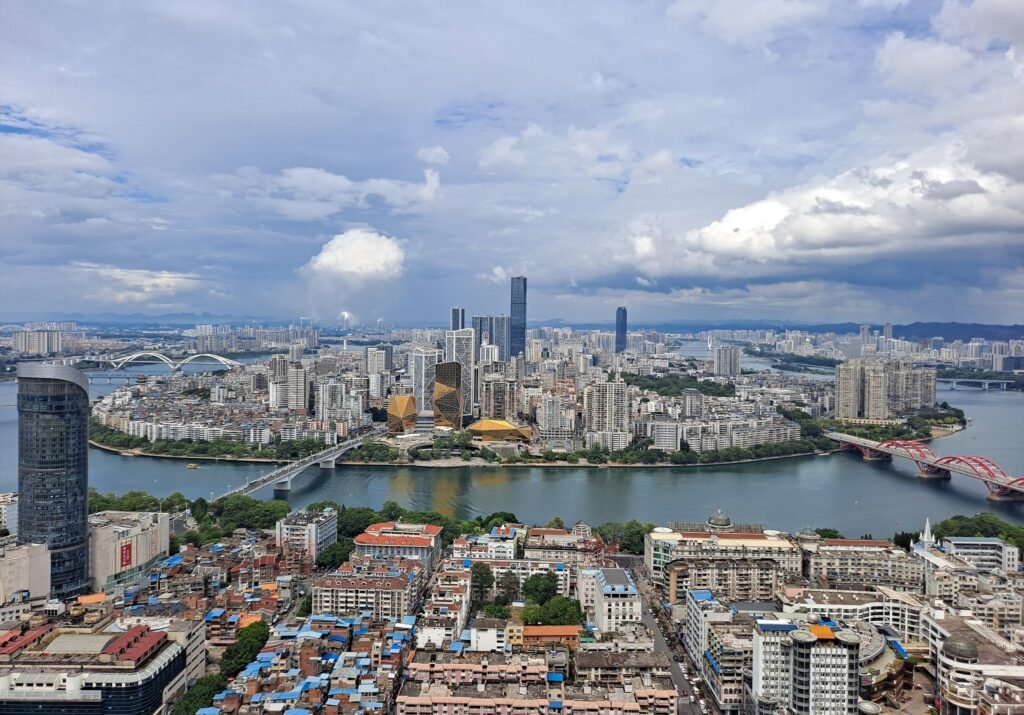
Liuzhou (柳州市) sits in north-central Guangxi where the Liu River (柳江) coils through a basin of limestone peaks, giving the city a compact, scenic core that is easy to enjoy without a long list of paid tickets. It works as a low-stress counterpoint to the headline landscapes of Guilin and Yangshuo, and as a logical high-speed-rail stop between Nanning and the Guilin corridor.
A river shaped the whole city
The Liu River bends in a near-U through the urban centre, and almost everything worth doing sits within walking or a short ride of its banks. The nickname “壶城” (pot city) comes from this enclosed loop of water. Because the peaks rise directly from the city, the skyline reads as landscape rather than concrete, which is unusual for an industrial base of this size and helps explain why visitors describe the place as a “natural bonsai” garden at metropolitan scale.
What Liuzhou is actually good for
The core attractions are mostly open public space. Ma’anshan (马鞍山) Park gives the single best overview: a short climb or lift ride to a summit that looks down on the river’s U-bend and the lit city at night. Longtan Park (龙潭公园 / 大龙潭风景区) is a free karst garden with minority-style wind-and-rain bridges and calm water, good for a slow half day. The riverside night scene is the city’s strongest card, with evening boat cruises on the Liu and a musical fountain that draws local crowds. For culture, Liuhou Park (柳侯公园) commemorates the Tang official Liu Zongyuan, and the Industrial Museum reframes the city’s manufacturing past inside former factory halls. None of these require the kind of advance booking that busier national sites do.
Who it suits
Liuzhou fits travellers who want a real city rather than a staged scenic zone, and who are comfortable with informal food culture. The signature dish, luosifen (螺蛳粉), is pungent and divisive, so visitors who dislike strong fermented flavours should plan alternatives. It suits independently routed travellers using high-speed rail, families wanting free, low-risk parks, and photographers interested in night urban landscapes. It is less compelling for visitors who want pristine wilderness or a tightly curated heritage trail; the appeal is everyday life set against karst, not spectacle.
The industrial-and-natural mix
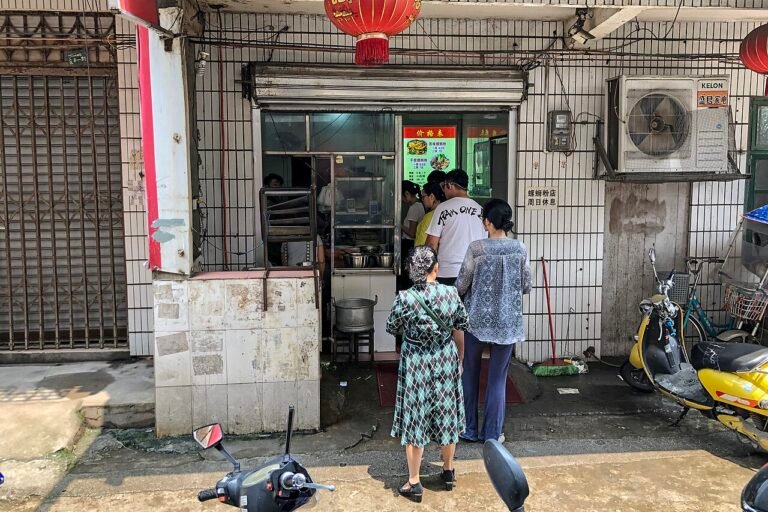
Liuzhou is genuinely a manufacturing centre, and that shapes the experience in practical ways: broad roads, a working river port, and a pragmatic, unpretentious street life. The water quality of the Liu has improved markedly over recent years, which is why riverside activity is now central to the visit. Accepting this dual identity is the key to enjoying the place; treating it as a failed Guilin misses the point. The free museums and parks are a deliberate local strategy to keep the city visitable without heavy spend, and that makes it a comparatively forgiving stop when a longer route needs a budget or energy reset.
How it sits in a southern route
Geographically, Liuzhou is roughly between Nanning and Guilin, and most visitors reach it by train rather than flying. It pairs naturally with Guilin as a one-night contrast: Guilin for the iconic river-and-peak postcard, Liuzhou for an evening river scene and a meal. It can also break a Nanning–Guilin or Nanning–Guangzhou rail journey. Because the highlights are concentrated and free, it rewards a short stay better than a long one; two nights is enough to see the core without rushing, and a third only makes sense if you add the Sanjiang Dong villages (程阳八寨) for wind-and-rain bridges and minority culture.
Practical notes
- Liuzhou is reached most easily by high-speed rail; check current timetables and the Liuzhou railway station location via official sources before booking.
- Core parks such as Ma’anshan and Longtan are generally free, but verify any lift, boat, or museum opening details on current official channels.
- The Liu River night cruise and musical fountain run on schedules that change by season; confirm times locally rather than assuming a fixed hour.
- Best months are typically spring (March–May, when the city’s bauhinia blooms) and autumn (September–November); summer is hot and humid.
- Luosifen is widely available but strongly flavoured; travellers with aversions should identify milder options in advance.
- Within the city, shared e-bikes and ride-hailing are the normal way to move between riverside sites; check whether app-based services require a local payment method.
- Pair Liuzhou with Guilin or Nanning rather than treating it as a standalone destination; one to two nights is the realistic window.