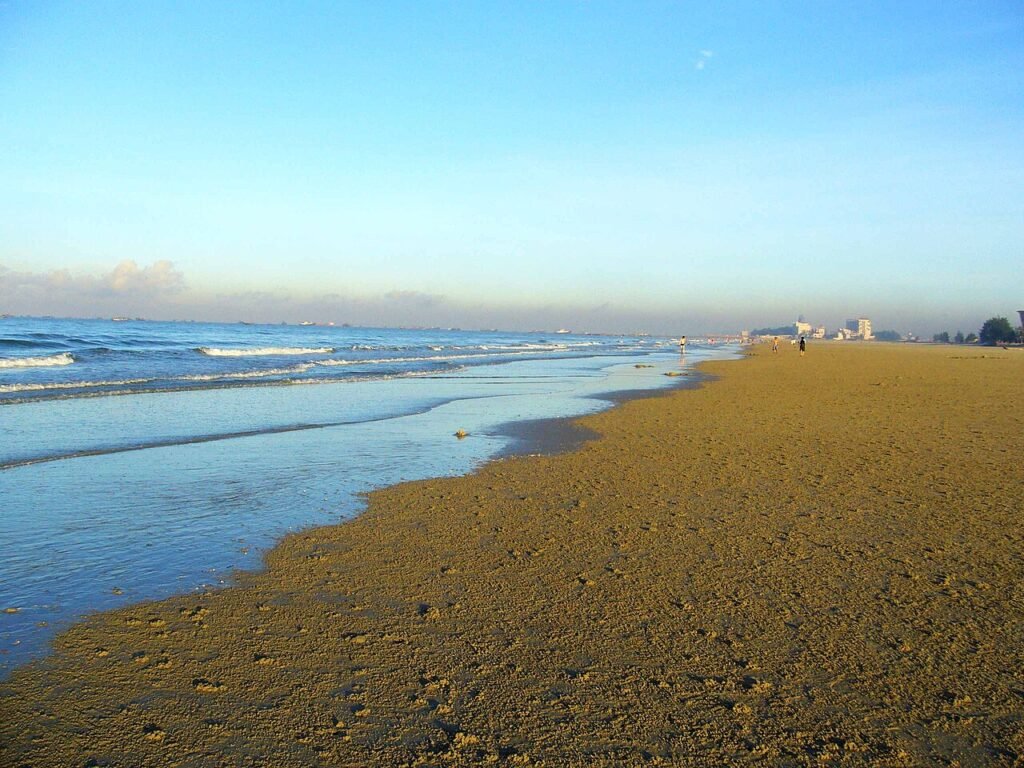
Beihai (北海市) is the coastal outlet of a Guangxi route, and the practical planning revolves almost entirely around one decision: how much of your time goes to Weizhou Island (涠洲岛). The city is easy to reach, but the island ferry is the link that needs the most attention, because sailings are weather-dependent and the entry pass is a separate step.
Reaching Beihai
Beihai has both a high-speed rail connection (most usefully from Nanning) and an airport with domestic flights. For a route that already runs through Guangxi by train, the rail approach from Nanning is the simpler default and avoids the airport buffer. The city centre, the Silver Beach strip, and the ferry terminal are spread out, so the question is less “can I get there” and more “where do I base.”
The ferry is the operative link
Weizhou Island is reached by passenger ferry from Beihai, and this is the single item to plan first. Ferries run on a schedule that shifts by season, cabins are tiered, and sailings are cancelled when the sea is rough — most often in typhoon season. An island entry pass is required in addition to the boat ticket. Because the booking window and the exact terminal procedure change, treat any stated price or departure time as provisional and confirm through current official sources before you build the rest of the itinerary around a specific day.
How long to spend
A mainland-only Beihai stop can be done in one night: Old Street, Qiaogang food street, and a beach walk. But if Weizhou is the goal, plan for the island itself to take two or three nights, plus a buffer night on the mainland in case the ferry is delayed or cancelled. A common, comfortable shape is one night in Beihai, three on Weizhou, and one more on the mainland — five nights total for the coastal chapter. Anything shorter risks the island feeling rushed and leaves no slack for weather.
Best months and weather
Beihai’s climate is maritime and subtropical, with a long warm season and little real winter; swimming is generally possible across spring through autumn. The catch is the storm season: summer into early autumn brings typhoons that can halt ferries for a day or more. Spring and autumn are the steadiest windows for both the beach and the crossing. If the island is essential to the trip, avoid the peak-risk months or pad the schedule with buffer days you can absorb.
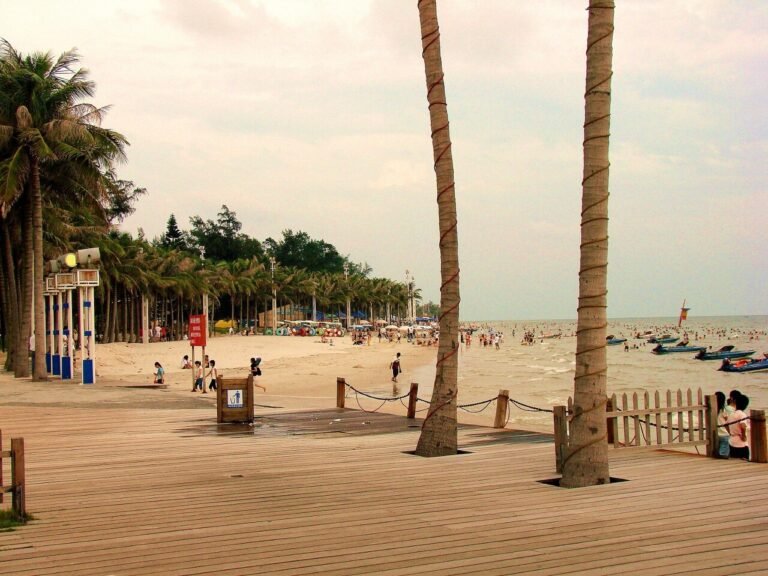
Sequencing with Guangzhou, Guilin, Nanning, and Xiamen
Beihai belongs at the end of an inland Guangxi run: Guilin → Liuzhou → (Chongzuo) → Nanning → Beihai is the natural spine, with Beihai as the sea finale. It does not fit a Guangzhou–Guilin through-line without a deliberate detour southwest from Nanning. It has no sensible place in a Fujian route (Quanzhou, Yongding); those are a different province and a different trip, best flown or railed separately. Leave Beihai for last so that any ferry delay does not threaten the rest of the schedule.
What to verify before travel
Ferry timetables, cabin classes, the island entry pass, and weather policy are the highest-risk items. Beach facility charges, the musical fountain or park hours, and any mangrove or geopark tickets should also be checked against current official sources. Old blog prices for the ferry are especially unreliable because the booking system has been centralised and the window changes. Confirm everything tied to the crossing before you book non-refundable mainland nights around it.
Practical notes
- Travel to Beihai by rail from Nanning or by air; confirm current services via official channels.
- Book the Weizhou ferry and island pass through current official sources; expect weather cancellations.
- Plan two to three nights on the island plus a mainland buffer night if the crossing is essential.
- Favour spring and autumn for stable sea conditions; avoid peak typhoon months or add slack.
- Keep Beihai as the coastal tail of a Guangxi loop, after Nanning.
- Silver Beach and Old Street are free to enter; verify any shuttle or facility charges locally.
- Qiaogang is the easiest casual-food cluster; agree on seafood pricing before ordering.
- Weizhou has limited road connections; e-bikes are the usual island transport — check rental rules on arrival.