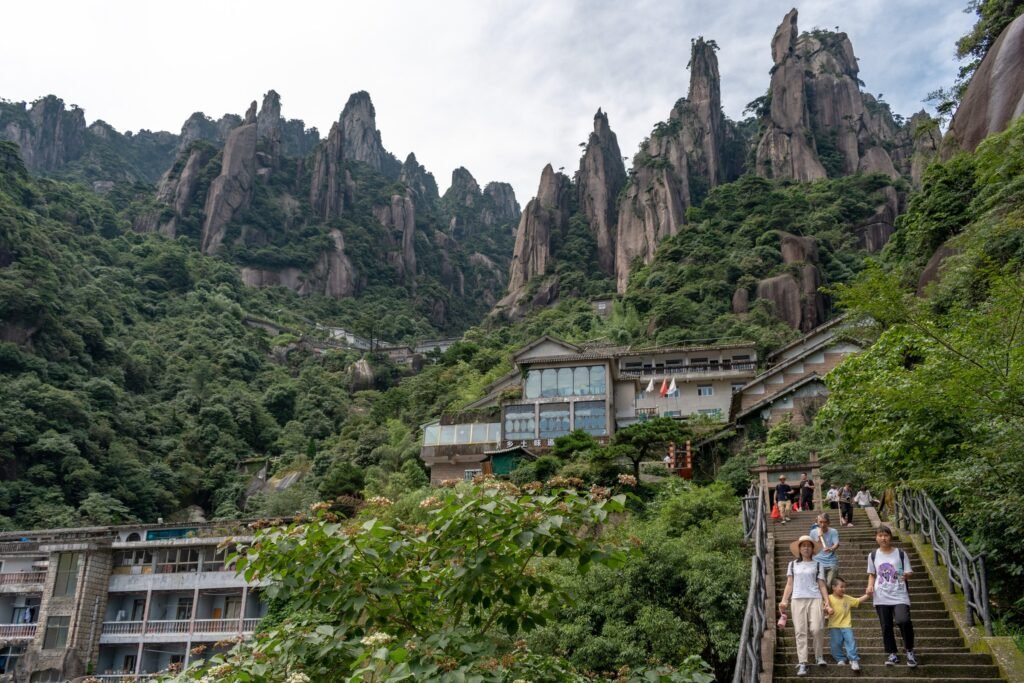
Sanqing is a mountain excursion first and a destination second, so access, seasonality and the right number of nights decide whether the visit works. This guide centres on getting there, timing, altitude and weather variability, and how to sequence the mountain with Jingdezhen, Wuyuan and Nanchang.
How to reach Sanqing
The mountain is reached through Shangrao, in northeastern Jiangxi. High-speed rail to Shangrao or Yushan connects the park to the provincial network, and from there shuttle buses or shared cars run to the two cableway bases — Waishuangxi (south) and Jinsha (east). The transfer from the rail station takes roughly one to two hours depending on the entrance and road conditions. There is no train directly to the mountain, so build the last leg of road transfer into your timing. Flying into Shangrao’s airport is an alternative if you are coming from farther afield.
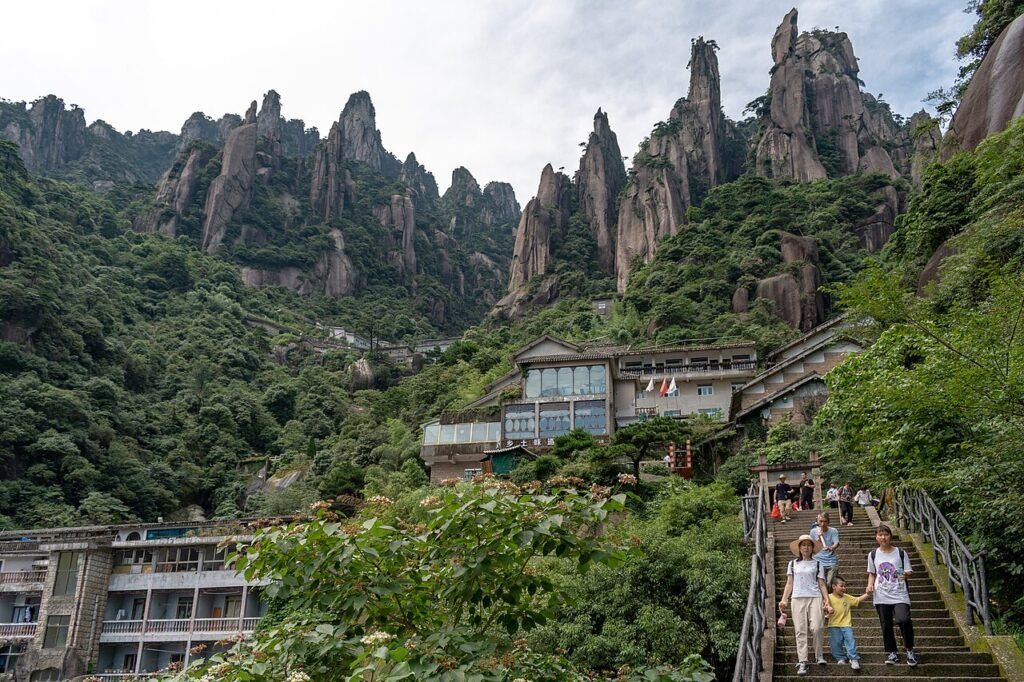
The two entrances and the cable cars
Sanqing has two cableways, and which you choose changes the day. The Jinsha (east) entrance puts you closer to the main peaks and most of the famous formations, while Waishuangxi (south) is the other standard access. A shuttle links the two bases, but schedules are not always reliable, so decide your entrance the night before. The cable cars do the heavy climbing; from the top, the loop is walked on boardwalks. Do not plan to walk from the base to the summit — the cable car is the practical ascent for nearly everyone.
How long to allow and the altitude
Plan one full day on the mountain as the minimum, and consider an overnight on the summit if you want sunrise or a relaxed circuit. The main loop covers a long distance and takes most of a day at a normal pace; a shorter walk is possible but misses the signature formations. The highest point is around 1,819 metres. That is enough to feel cooler and thinner air than the surrounding lowlands, but it is not an altitude-risk mountain the way Shangri-La is — the main physical challenge is the length of the walk, not the height.
Best months and weather variability
Spring (April–May) brings rhododendron blooms and autumn (September–October) brings the clearest skies and best foliage, making those the preferred windows. Summer is green but humid and prone to afternoon cloud that can flatten the views; winter is cold and sometimes icy on the boardwalks. The defining point is variability: Sanqing’s famous cloud sea depends on mist, so a “bad weather” day may still be atmospheric, while a clear day may lack the signature sea of cloud. Check current official sources for opening status and any weather closures.
Sequencing with Jingdezhen, Wuyuan and Nanchang
Sanqing fits a northeastern Jiangxi loop: Nanchang → Jingdezhen (porcelain) → Wuyuan (villages and rapeseed) → Sanqing, or the reverse. Because the mountain is the most physically demanding item, place it when legs are still fresh or when you can recover afterward. It does not connect to a Yunnan or Guizhou route and should stay within Jiangxi planning. Allow a buffer night near the mountain rather than packing the loop between two long transfers.
Inside the park, the boardwalks are the experience, not a means to it. The West Coast and Sunshine Coast sections are built along cliff edges precisely to show the pillars emerging from cloud, and much of the walking is on these constructed paths rather than rough trail. That makes Sanqing more accessible than a raw mountain hike, but it also means the day is governed by the cable-car schedule and the last descent, not by how far you feel like walking. Plan the loop direction around the light and the last cable car, and treat the summit as a place you pass through on a timed circuit rather than a base you settle in.
Practical notes
- Rail to Shangrao or Yushan, then shuttle/car to Jinsha or Waishuangxi; verify times with official sources.
- Pick your entrance in advance — east (Jinsha) is closest to the main peaks; south (Waishuangxi) is the other standard base.
- Allow a full day on the loop; add a summit overnight only if you want sunrise or a slow pace.
- Spring and autumn are best; weather is variable year-round, so pack layers and rain gear.
- Note the last cable car down — missing it means an unplanned summit night; confirm the time locally.
- Confirm all entry and cable-car pricing with current official sources before travel.